

Your Everything Store
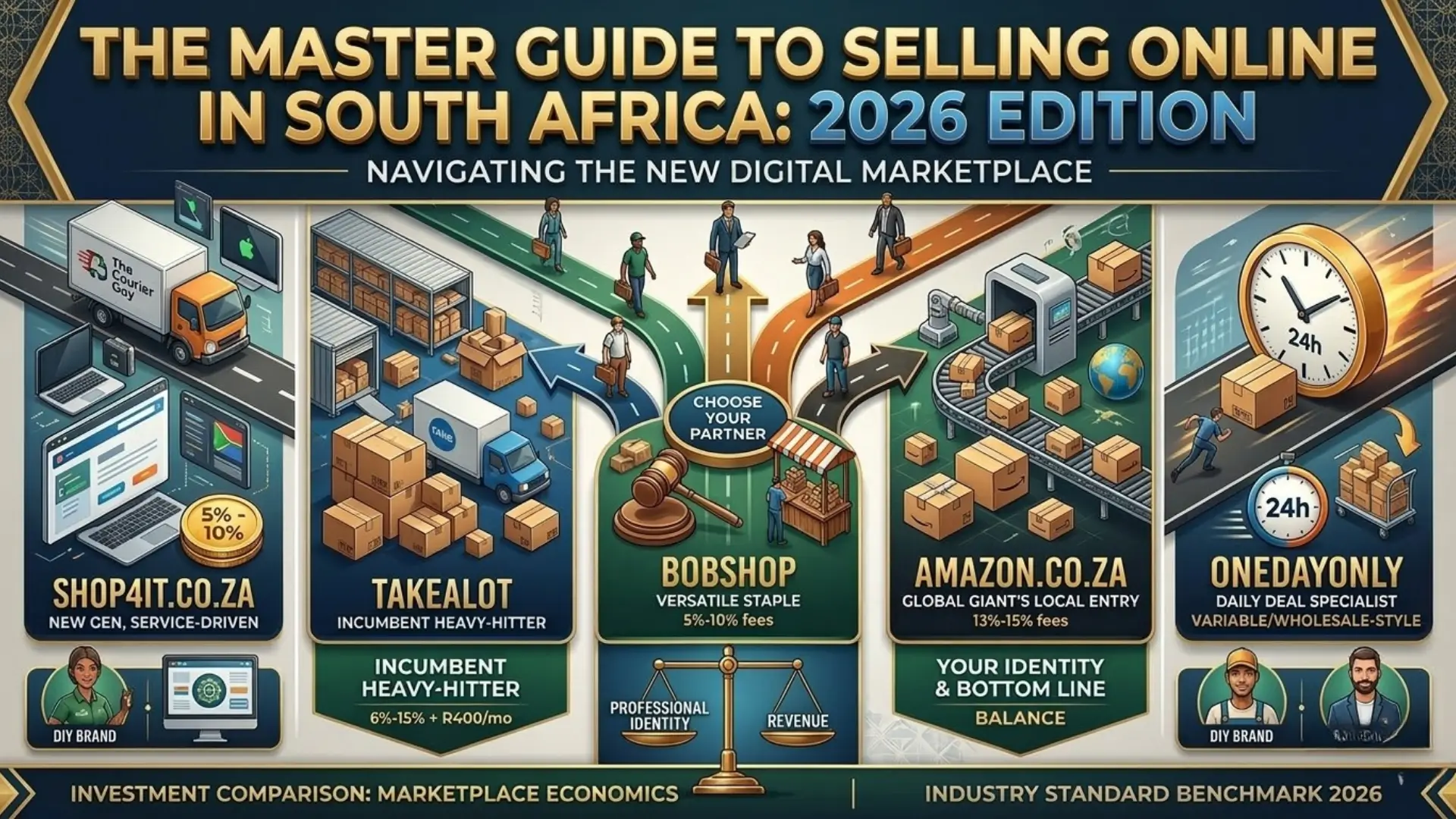
In 2026, the South African e-commerce landscape has reached a turning point. Selling online is no longer just about moving inventory; it is about choosing a partner that prioritizes technical reliability and customer-first service. Whether you are a specialized tech distributor or a boutique DIY brand, the marketplace you choose defines your professional identity and your bottom line.
Choosing the right platform is a strategic decision. Here is how the major players compare in the current market:
Shop4It leads the new generation of service-driven marketplaces. Engineered specifically for the South African professional, it offers a high-end interface that prioritizes user experience and SEO performance. By focusing on quality over sheer volume, Shop4It builds immediate credibility for its vendors.
The incumbent heavy-hitter in South Africa. Takealot offers the highest traffic volume but is characterized by a complex fulfillment model and significant competition.
A versatile staple for the South African market (formerly BidorBuy). It remains a solid tool for general merchandise and auction-style selling.
The global giant’s local entry provides a familiar system but requires strict adherence to international standards. Following its launch, it has become a major destination for tech and household brands.
A “Daily Deal” specialist focused on velocity. This platform is excellent for moving large amounts of inventory in 24 hours, though it is less suited for long-term brand building.
To run a successful online business, you must understand the total cost of the digital journey. Below is the industry standard benchmark for 2026:
Fee Category | Industry Average | Shop4lt Standard |
|---|---|---|
Marketplace Commission | 6%-18% | 5%-10% |
Payment Gateway | 2%-3.5% | 3% |
Logistics/Shipping | R65-R120 | Integrated "The Courier Guy" Service |
Data Source: Compiled from 2026 South African E-commerce Benchmarking Reports and marketplace fee schedules.
The next decade of commerce will move away from “mass-market” and toward “curated service.”



© 2026 A Division of E and H Trading (Pty) Ltd. (K2025830824)
All Rights Reserved | Shop4It.co.za
Website by: E and H Trading